

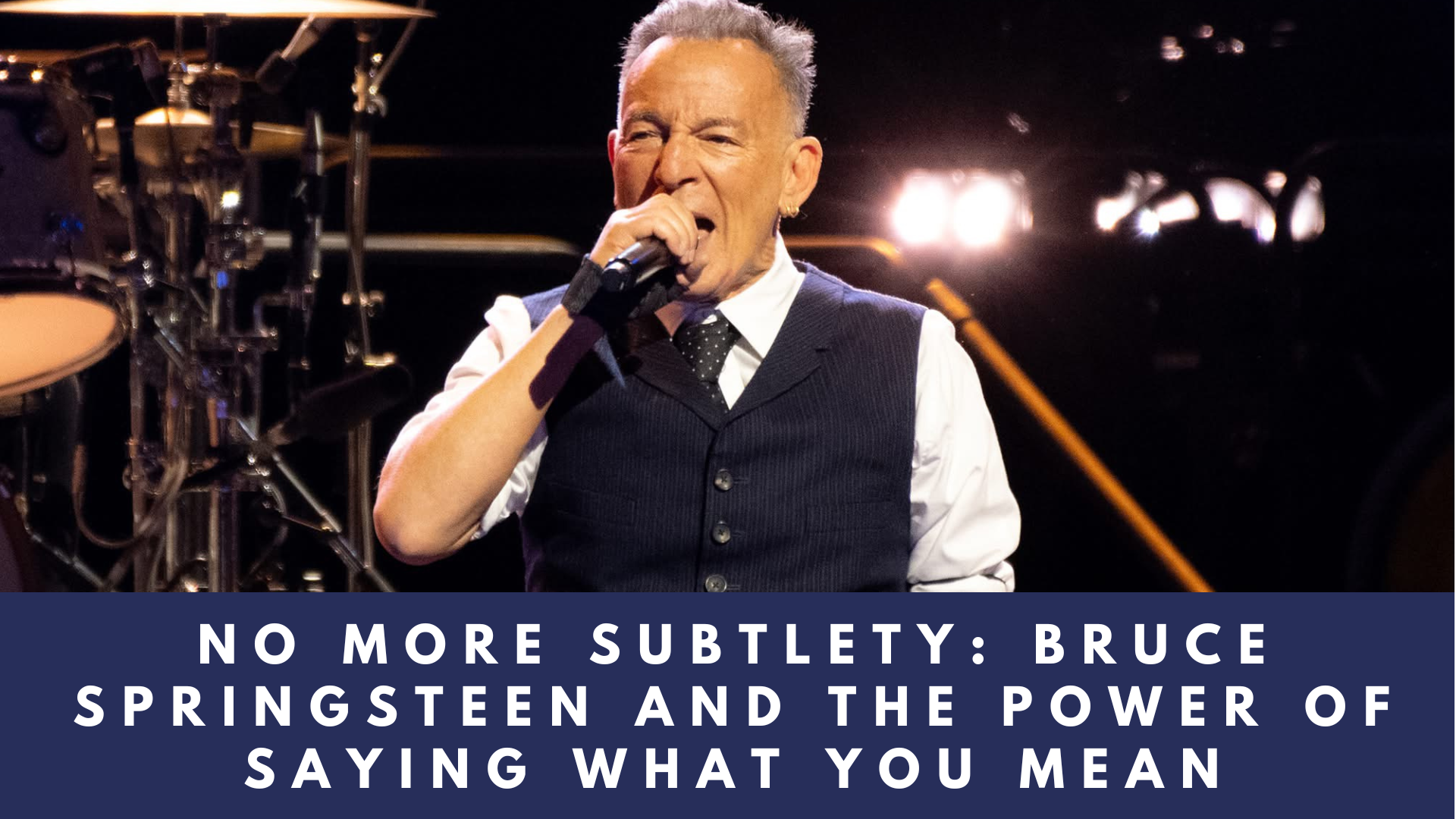
No more subtlety: Bruce Springsteen and the power of saying what you mean
No more subtlety: Bruce Springsteen and the power of saying what you mean
Bruce Springsteen has always sung about peace and justice. His most famous song, "Born in the USA," has been embraced by the right as a patriotic anthem. In fact, it's a protest song about how returning Vietnam veterans were neglected and disillusioned. It's about the failure of the American Dream. But millions of people have completely missed the point.
Ronald Reagan tried to use it as a re-election anthem in 1984, misunderstanding the story of a desperate veteran with “nowhere to run, nowhere to go.” If a presidential campaign can completely misunderstand a song's meaning, what chance does the average listener have?
This is the problem with subtlety: people hear what they want to hear.
If you see Bruce as a working-class hero who celebrates ordinary people, you filter everything through that lens regardless of what he's actually saying. Emotional experience overrides content. Great art endures precisely because it can be interpreted in so many ways, but when you have an urgent message to deliver, that same richness can work against you.
“Born in the USA” was not an anomaly. It's part of a decades-long body of work rooted in fierce commitment to justice and human dignity.
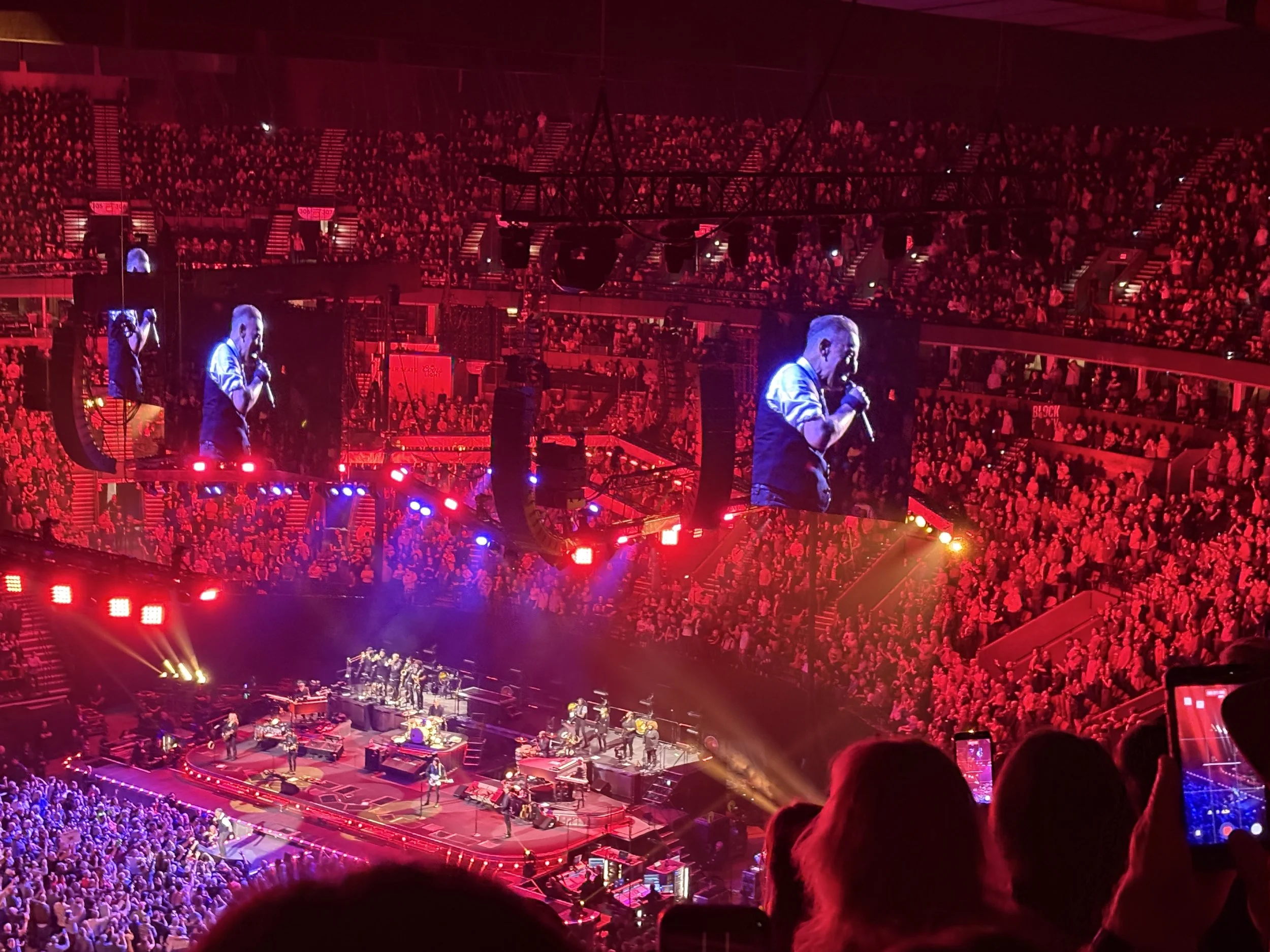
Last night my husband and I attended Bruce's incredible Land of Hope & Dreams tour in Portland. Conscious of it being Good Friday, I felt the moving experience was like a tent revival. Next to me sat a man who didn't clap, stand, or cheer, while his wife lustily shouted "ICE OUT" along with the rest of us. I found myself wondering if he’d misunderstood Springsteen's message all these years.
Our view
Springsteen has always told the stories of people left behind by the American Dream.
“Youngstown” mourns generations of workers whose labor built a nation that discarded them. “Death to My Hometown” compares Wall Street's destruction of working-class communities to an act of war. “The Ghost of Tom Joad” draws from Steinbeck to confront poverty and injustice. The message has always been consistent. But when you wrap it in narrative and metaphor, it's easy to hear only what you want to hear.
The Land of Hope & Dreams setlist is not a greatest hits package. It is a carefully constructed argument moving from fury through grief to solidarity and ultimately hope. Opening with Edwin Starr's thunderous “War” announced the evening's intentions immediately. “American Skin (41 Shots),” written after police killed Amadou Diallo in 1999, asked why Black Americans must fear for their lives. Then came his latest “Streets of Minneapolis,” naming George Floyd's city directly and leaving nothing open to misinterpretation.
But the setlist doesn't stay in fury. “My City of Ruins” moves toward healing. “The Rising” meditates on sacrifice and redemption. “Land of Hope and Dreams” imagines America as a train with room for everyone…the lost, broken, and forgotten. Closing with Dylan's “Chimes of Freedom,” Bruce sang a hymn to all the marginalized people of the world.
This is a man who has decided you are going to hear exactly what he means.
Most of us aren't rock stars with stadiums full of people, but we have a platform of some kind. It might be a workplace, community, family dinner table, or a social media feed. And most of us face the same choice Springsteen faced: do I hint at what I believe and hope people figure it out, or do I simply say it?
When we don’t spell out how we are feeling, we become complicit in what’s happening in this country. We become like the silent Germans who watched when their neighbors were taken to the gas chambers.
George Orwell argued that clarity in writing was a moral obligation. If you want people to understand something important, you owe it to them to speak plainly. If there is any chance of being misunderstood, you will be misunderstood.
When you spell it out, you lose some people. Springsteen's disaffected fans prove that. They wanted to love Bruce on their own terms, to project onto him whatever they needed him to be.
But clarity also reaches the people meant to hear the message…the fans who hoped Springsteen was exactly who they thought he was.
Bruce has come to a point in his life (at 76, he is as fit and energetic as ever!!) that he realizes the crisis and threats to our democracy are so serious he can no longer afford to be subtle. Losing some listeners to speak truth to power is not a failure. It is the courage to be yourself, use your platform for good, and trust people with the truth.
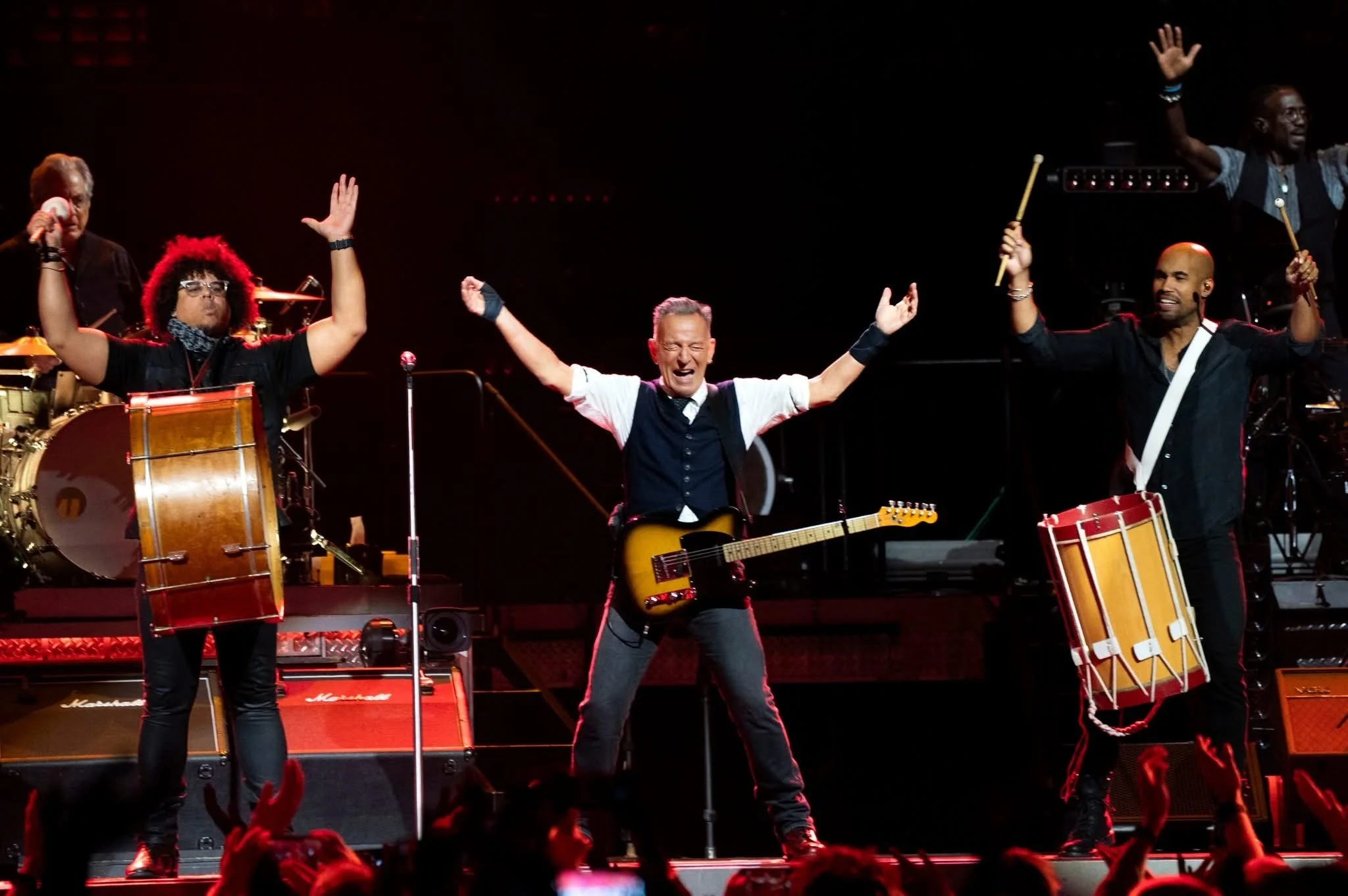
He also models outstanding leadership, engaging with the audience and celebrating his phenomenal E Street Band, thanking each one of them as they leave the stage. And throughout the concert, it was clear he loves what he does.
Maybe Bruce influenced my seat neighbor’s thoughts and will make him view what’s happening in a more compassionate way. I’ll never know.
Springsteen has been singing about hope, justice, and human dignity for more than 50 years. The message was always there.
He just finally made sure we are hearing it.
Be yourself. Use your platform. Don’t be subtle. Spell it out. Sometimes, that's what it takes.
Let’s make your message the one they remember. Fertile Ground Communications transforms complex ideas into clear, compelling messages that capture attention and inspire action. Whether you’re a small business, public agency, or nonprofit, we help your voice break through the clutter and connect authentically with your audience.
