

Do you know what's in your drinking water?
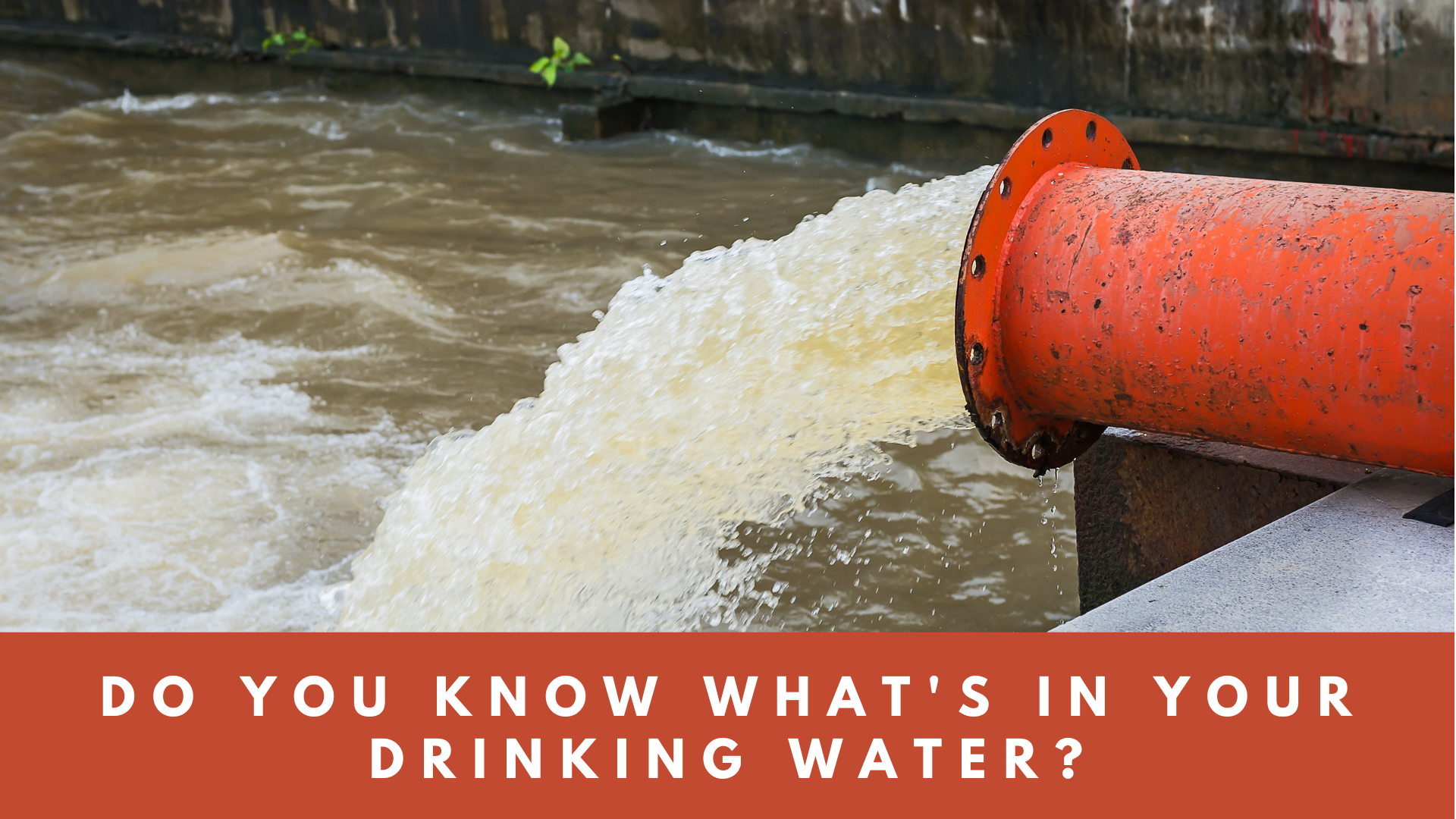
Do you know what’s in your drinking water?
A few weeks ago I caught the kind of cold that took the wind out of my sails. I was in bed all week, reading three books and streaming a bunch of shows and movies. One of the movies was “Dark Waters,” with one of my favorite actors, Mark Ruffalo, similar to “Silkwood” and “Erin Brockovitch.”
The case that started it all
In the late 1990s, a West Virginia farmer named Wilbur Tennant began noticing strange, mysterious symptoms in his cattle. They developed tumors, black teeth, bloated organs, and lesions on their hides. They also became aggressive and unsteady, suffering from diarrhea and foaming at the mouth. More than 150 of his cows died, and many of the calves were stillborn or deformed. Tennant discovered a white, soapy foam and green liquid leaking from the nearby DuPont landfill into a stream from which his cattle drank.
When he approached DuPont about the problems, the corporation blamed the sickness on poor farming practices, such as "poor nutrition, inadequate veterinary care, and lack of fly control," rather than their chemical dumping. Fortunately he convinced a corporate defense attorney, Rob Bilott, to take the case. What he found changed everything about these “forever chemicals.”
DuPont had been manufacturing a chemical called perfluorooctanoic acid (PFOA) since the 1950s to produce Teflon nonstick coating. As Bilott finally discovered, the company had known for decades that PFOA was toxic, it accumulated in human blood, and it was contaminating the drinking water of tens of thousands of nearby residents. They did nothing to stop it.
DuPont contaminated the drinking water of 70,000 residents in West Virginia and Ohio with PFOA, causing widespread, severe health issues, including cancers, birth defects, and chronic diseases. Residents reported babies born with birth defects, including eye deformities similar to those in animal studies. PFOA was found in the blood of residents at 3 to 10 times the average levels.
After a prolonged legal battle, DuPont settled 3,500 personal injury lawsuits for around $671 million, but no executives faced criminal charges. The film Dark Waters tells Bilott's and Tennant’s story. It’s worth your time.
Have you heard the term "forever chemicals"? These chemicals are real, they are in most of our bodies right now, and how they got there is one of the more disturbing corporate cover-ups in recent American history.
What PFAS are and why they matter
PFOA belongs to a massive family of synthetic chemicals called PFAS, short for per- and polyfluoroalkyl substances. Thousands of them are used in nonstick cookware, food packaging, stain-resistant fabrics, firefighting foam, cosmetics, and countless industrial applications.
They are called forever chemicals because nature cannot break them down. The chemical bond at the core of every PFAS molecule is nearly indestructible, so our bodies cannot break it down either. Once PFAS enter your bloodstream, they accumulate in your tissues and stay there for years. The Center for Disease Control estimates PFAS are detectable in the blood of 97 percent of Americans.
As seen in the DuPont case, high PFAS exposure can cause kidney and testicular cancer, thyroid disease, elevated cholesterol, immune suppression, and pregnancy complications. A 2024 review by the National Toxicology Program confirmed that PFAS suppresses antibody response, meaning exposure can also reduce how well vaccines work.
Where things stand now
I first started reading about PFAS when I wrote an article for a client in 2024 about EPA finalizing the first national drinking water limits for six PFAS compounds, setting the standard for PFOA and PFOS at four parts per trillion. It was a significant step. However, industry legal challenges and pushback from the current administration have created uncertainty about how and when those limits will actually be enforced. Some states have moved ahead with their own stricter rules. Many have not. And if you are on a private well, federal protections do not apply to you at all.
What you can do to reduce your exposure
Filter your water. Most PFAS exposure comes from drinking water, and standard pitcher filters do not remove PFAS. You need a reverse osmosis system or a high-capacity activated-carbon filter certified to NSF/ANSI 58 or 53 standards. We purchased an Epic Pure XP Pitcher, which is supposed to reduce fluoride, PFAS, and parasites, and we use the filtered water for cooking as well as drinking and tea water.
Ditch your nonstick cookware, especially old or damaged pans. Ceramic coatings or seasoned cast iron, carbon steel, and stainless steel offer natural, chemical-free nonstick properties.
Reduce your reliance on plastic, much of which contains PFAS. Store your food in glass or stainless steel containers.
Prioritize fresh, whole foods and avoid heavily packaged processed foods. PFAS leaches into food from grease-resistant packaging, such as microwave popcorn bags (notorious for high PFAS levels), fast-food wrappers, and takeout containers.
Be wary of "stain-resistant" products: avoid carpets, furniture, and clothing treated with materials like Teflon or Stainmaster. PFAS are often used in water-resistant, stain-resistant, exercise, and outdoor gear. Steer clear of items labeled "waterproof," "water-resistant," "stain-resistant," or "oil-resistant” and look for companies that have committed to being PFAS free, such as Patagonia, Keen, and others.
Check ingredient labels: Avoid cosmetics, sunscreens, and dental floss containing "fluoro" or "perfluoro" ingredients.
What else can we do?
Spread the word! Most people don’t know much about PFAS. Watching the movie “Dark Waters” is a good start to understand the scope of the problem. Advise your friends and family members to reduce their PFAS exposure through the steps above.
Look up your local water quality through the EWG Tap Water Database at ewg.org. Our water quality in Portland is pretty good, but the database shows contaminants of arsenic, haloacetic acids, and total trihalomethanes, all of which are caught in our new reverse osmosis water filter.
Contact your water utility and ask what they are doing about PFAS.
Contact your elected representatives, particularly those sitting on environment and public works committees, and tell them you want state and federal drinking water protections upheld and strengthened. It seems that the states are driving this battle, especially with the current federal government abandoning environmental protections. As of early 2026, 39 states have introduced PFAS legislation, with at least 13 states leading in enacting restrictions on "forever chemicals" in consumer products, firefighting foam, and drinking water. Major 2026 actions include bans on PFAS in products like cookware, textiles, and cosmetics in several states.
Support environmental organizations like Earthjustice, the Environmental Defense Fund, and Clean Water Action, which have been fighting these battles in the courts and Congress for years.
PFAS contamination exists at a scale that no individual can solve alone. But Rob Bilott proved that corporate secrets can be exposed and the law can be moved. We need public pressure to keep that going.
Rob Bilott is still at it…he and Mark Ruffalo helped make a documentary, “How to Poison a Planet,” and he is pursuing more class-action lawsuits on behalf of those exposed to PFAS. He also wrote a memoir, Exposure: Poisoned Water, Corporate Greed, and One Lawyer's Twenty-Year Battle against DuPont.
Even though we’ll all been exposed to forever chemicals, we can prevent further exposure and damage by taking the steps outlined above. And let’s not keep quiet about this. Let’s not let big corporations continue to poison the planet.
Let’s make your message the one they remember. Fertile Ground Communications transforms complex ideas into clear, compelling messages that capture attention and inspire action. Whether you’re a small business, public agency, or nonprofit, we help your voice break through the clutter and connect authentically with your audience.
