

Gloria, Dolly, and Me
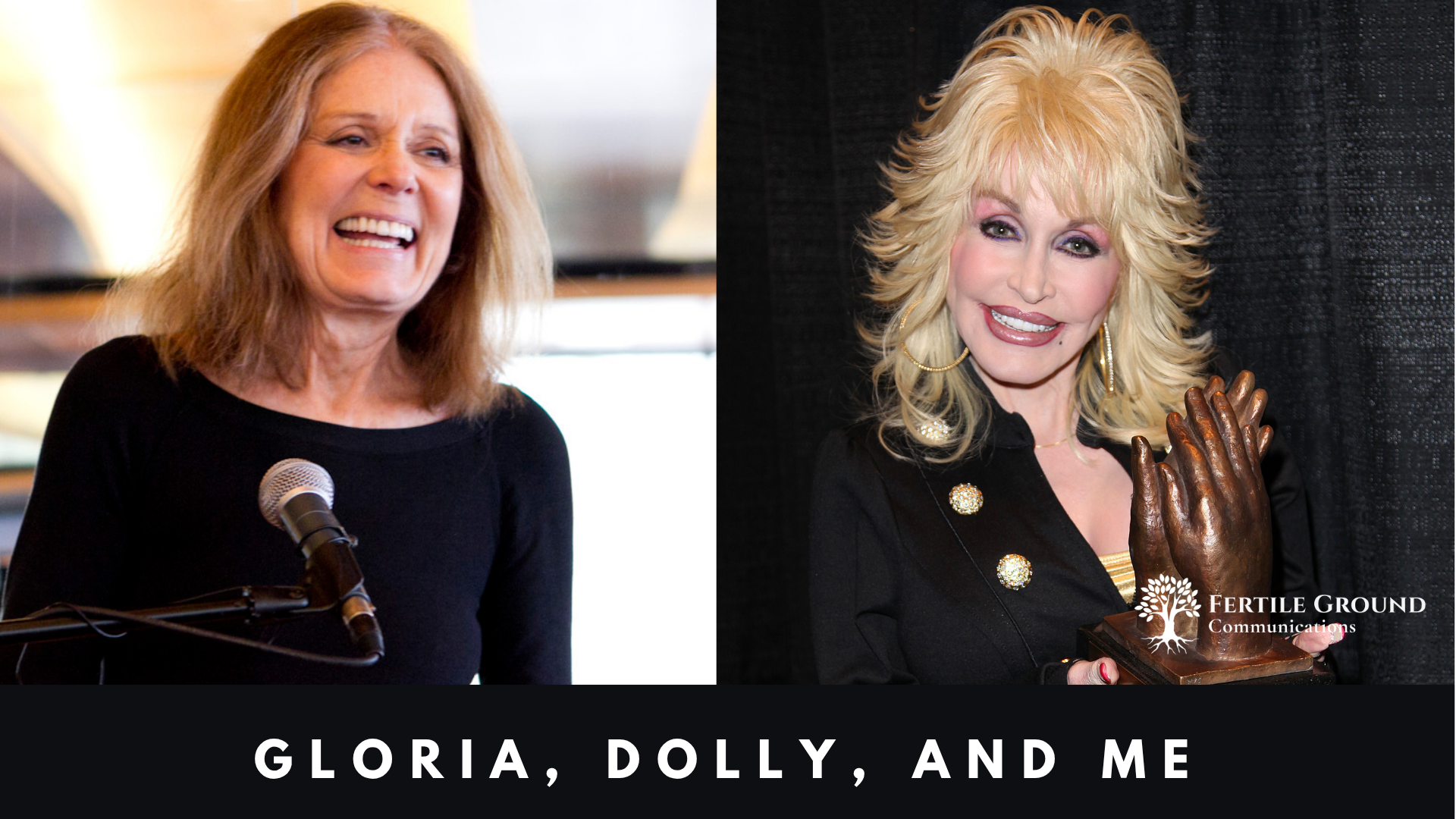
I discovered Gloria first, when I heard “Free to Be You and Me” in 1972. Marlo Thomas conceived of and created the album, book, and show, but it was produced in collaboration with the Ms. Foundation for Women, which had been cofounded by Gloria Steinem and others that year. NPR reports that Gloria Steinem was a driving force behind that project. At age eight, I was drawn to its themes of empowering girls and boys alike to become whatever they wanted to be. Boys could cry, and princesses didn’t have to get married. No one loved housework. My favorite song on the album was “Glad to Have a Friend Like You,” which I got to teach to a new generation of kids several years ago.
“We’ve begun to raise daughters more like sons…but few have the courage to raise our sons more like our daughters.”
-Gloria Steinem
When I read this Gloria Steinem quote in Outrageous Acts and Everyday Rebellions in 1983, little did I know I’d end up having three sons! I like to think that we raised them the same way we would have raised daughters. Mike was the stay-at-home dad and I the breadwinner, so we turned the traditional gender roles on their heads. Our kids grew up thinking it was the mom who left each morning and came home in time for dinner.
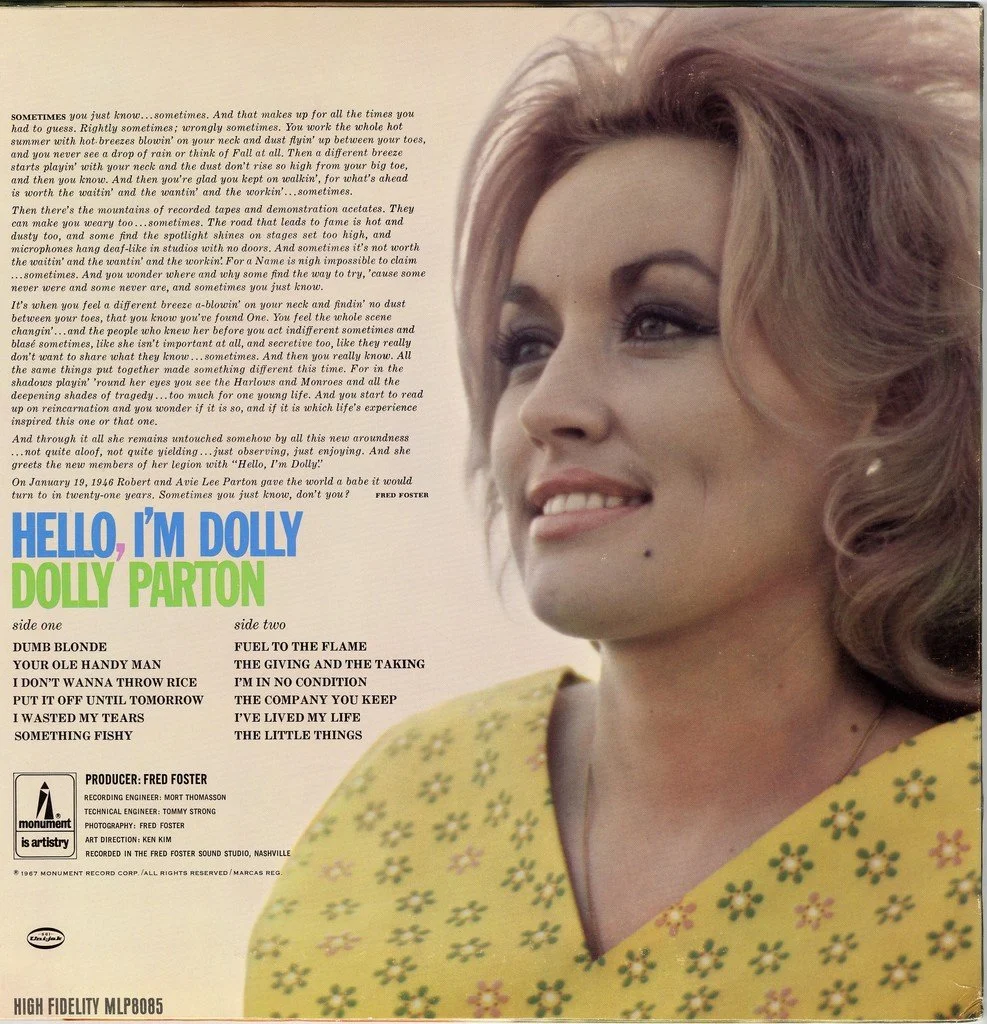
Dolly’s debut album in 1967
Around that same time that “Free to Be You and Me” came out, Dolly was touring with the Porter Wagoner show and had released multiple studio albums and written hundreds of songs. And even though she wasn’t crazy about the term “feminist” (she had outdated visions of bra burners and man haters), she had written the ground-breaking “Just Because I’m a Woman” in 1968.
“I can see you’re disappointed by the way you look at me
And I’m sorry that I’m not the woman you thought I’d be
Yes, I’ve made my mistakes, but listen and understand
My mistakes are no worse than yours just because I’m a woman”
Inspired by a conversation with her husband when he was disappointed to hear he wasn’t her first sexual encounter, the song reached No. 17 on the charts, but some stations refused to play it. In 1970 she wrote another controversial song, “Down from Dover,” about an unwed pregnant teenager. Few others were writing songs about the effects of patriarchy, especially in country music.
A few years after “Free to Be You and Me,” before I probably even knew the word “feminist,” I committed my first feminist act: correcting my handwriting exercise by adding “and women” to a male-only sentence. Fortunately my (favorite) teacher affirmed this change in the margins.
That small edit in the margin was the only tool I had at ten. Dolly had a bigger one: her voice, and the nerve to walk away from a man who wouldn’t let her use it. When she felt constrained and cornered by Porter Wagoner (the man who “discovered” her), she left his show and set out on her own, bravely facing his $3 million lawsuit.
When she wrote “I Will Always Love You” and Elvis asked to record it, she turned him down when his manager Colonel Tom Parker demanded half of her publishing rights. Young 28-year-old Dolly had the grit and gumption to stand up for herself in 1974.
Let’s look back on what that year actually looked like for women. We’d just won the right to get credit cards, mortgages, and loans in our own names, but we could still be excluded from juries. We could still be fired for getting pregnant, a practice that stayed legal until 1978. We couldn’t sue for sexual harassment on the job until 1977. Harvard and the military academies didn’t admit women until 1976, and women couldn’t serve in combat until 2013. Spousal rape was still legal in some states until 1993. Dolly said no to Elvis anyway.
Whitney Houston recorded the song in 1992. It became one of the bestselling singles in music history, and Dolly made more than $10 million in royalties alone from that single version. She used some of that money to invest in an office complex in a predominantly Black neighborhood in Nashville, because that’s who Dolly was.
As a badass entrepreneur, Dolly built a business and entertainment empire worth hundreds of millions of dollars by fiercely retaining all of her music publishing rights, co-owning Dollywood, and launching production and retail partnerships. She also wrote 3,000 songs and sold more than 100 million records during her 70-year career. (For more amazing details about Dolly and interviews with her, check out the incredible “Dolly Parton’s America” podcast!)
While Gloria was advocating for women’s rights, Dolly was living them out. As José Valentino Ruiz, Ph.D. wrote for the University of Florida news, “Dolly Parton understood the entrepreneurial power of creativity. She did not simply make things. She understood how ideas could travel. She understood how a song could become intellectual property, how intellectual property could create opportunities, how a recognizable identity could become a brand, how a brand could support multiple enterprises, and ultimately how the resources generated through those enterprises could be redirected toward communities and causes she cared about.”
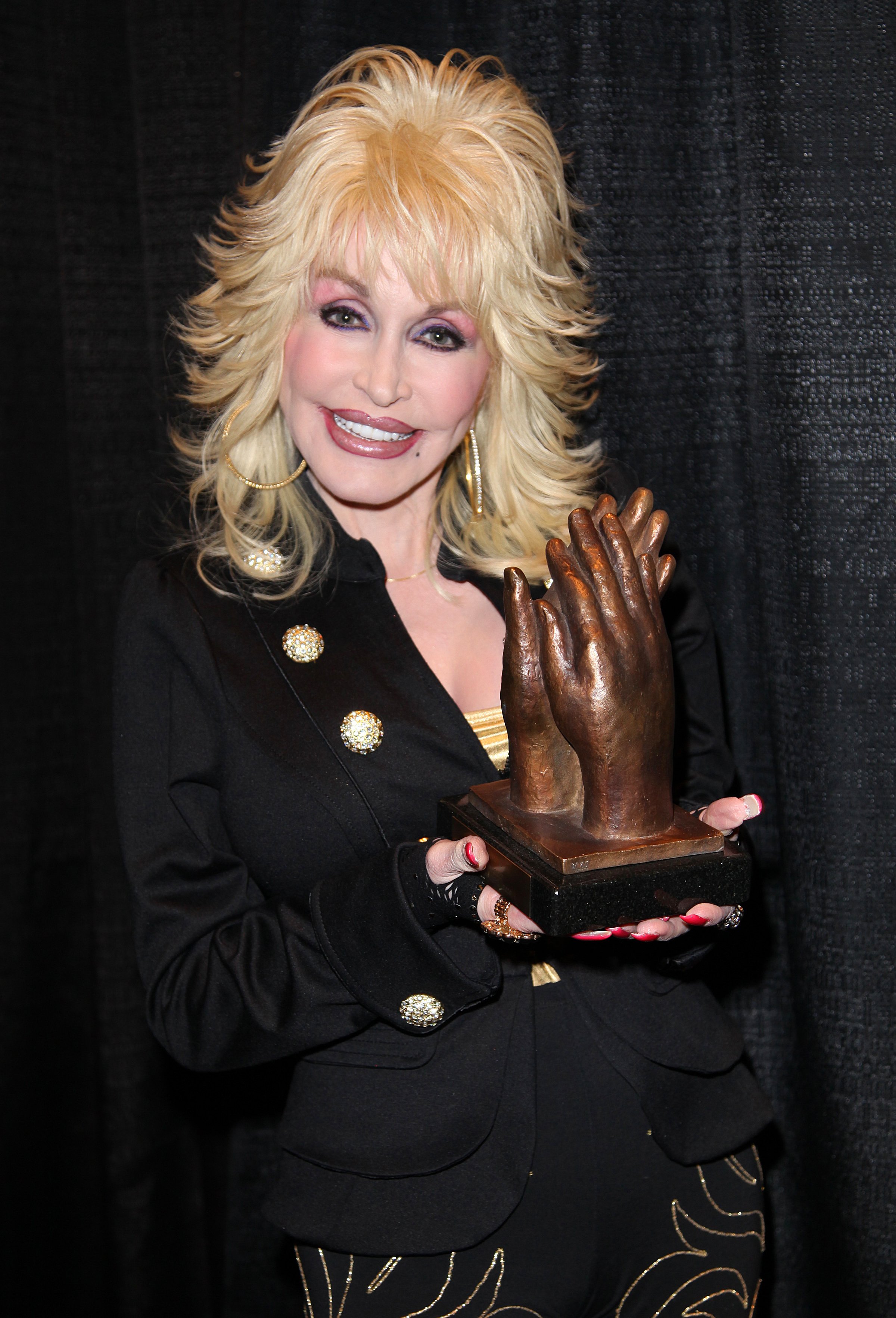
As Dolly got older, she got even better. She wrote her values right into her music and became an icon for the LGBTQIA+ community, writing “Travelin’ Through” for the film “TransAmerica,” inspired by two transgender friends. She repeatedly stated the queer community should be accepted for who they are and standing up for LGBTQ+ rights, often justifying her beliefs with her Christian faith.
“God made me for a reason and nothin’ is in vain
Redemption comes in many shapes with many kinds of pain
Oh, sweet Jesus, if you’re listenin’, keep me ever close to you
As I’m stumblin’, tumblin’, wanderin’, as I’m travelin’ through…
Oh, sometimes the road is rugged and it’s hard to travel on
But holdin’ to each other, we don’t have to walk alone
When everything is broken, we can mend it if we try
We can make a world of difference, if we want to, we can fly”
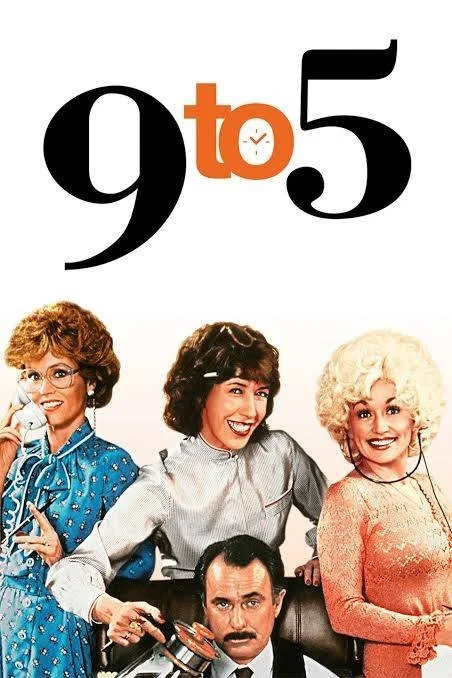
I was 16 when the movie and song “9 to 5” came out, and it made quite an impression on me. Before 9 to 5, Dolly had never acted! After Dolly died, Jane Fonda was asked if Dolly was a feminist.
“Oh, absolutely. Absolutely. You know, she knew from the get-go who she was. She knew that people would make fun of who she was because of how she looked. And so, she did it first. And she did it so smart. And she was always in charge of her life. She was always in charge of her talent and her business and her career. It came from her. So, yes, she was in charge of her life. She was a feminist.”-Jane Fonda
Like me, Dolly was the main breadwinner in her family, and she was supported by a husband behind the scenes who clearly was not jealous of her success. She rebelled against her traditional southern, country, and Pentecostal Christian upbringing to become a strong, independent woman who was universally beloved and practiced exactly what she preached.
Gloria Steinem recognized Dolly as a feminist icon, too, honoring her as one of Ms. magazine’s 12 Women of the Year in 1987.
“People who haven’t listened to Dolly Parton or to feminism may be surprised to learn that they go together,” she wrote. “In fact, she has crossed musical class lines to bring work, real life, and strong women into a world of pop music usually dominated by unreal romance. She has used her business sense to bring other women and poor people along with her. And her flamboyant style has turned all the devalued symbols of womanliness to her own ends.” -Gloria Steinem
I was an avid subscriber of Ms. Magazine for a few decades, cherishing especially the copies that came to me in Japan like a lifeline as I dealt with sexism there. Gloria, along with journalists Patricia Carbine and Letty Cottin Pogrebin, cofounded Ms. Magazine because no other magazine covered women’s rights and the women’s movement. They wanted more than recipes and tips on how to clean the bathroom. Male publishers and journalists were highly skeptical and critical, but 300,000 test copies of Ms. sold out in days, and 26,000 subscription orders were generated. In the first edition, 53 famous women publicly declared they had had abortions, although the procedure was still illegal in most places. Eleanor Holmes Norton wrote about the “Black family and feminism” and the magazine had an article on “How to Write Your Own Marriage Contract.” Ms. was the first major magazine owned, run, and written by women, and it continued to cover hot button topics like abortion, equal pay, sexual harassment, and domestic violence.
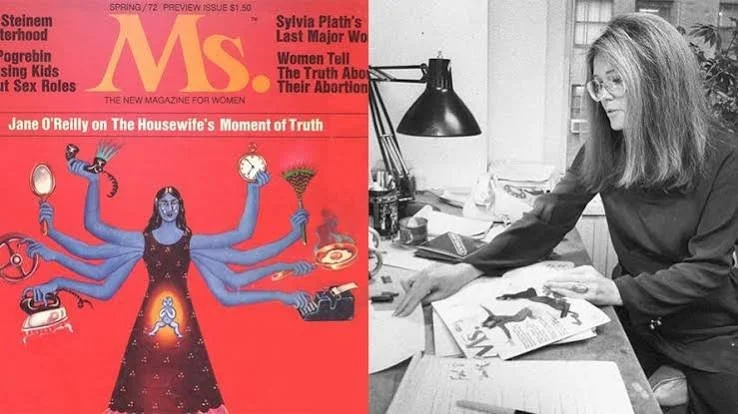
Dedicating her life to women’s rights, Gloria led marches, spoke all over the place, mentored and hosted young women in her home, and wrote 11 books. She cofounded the National Women’s Political Caucus in 1971 with Congresswoman Bella Abzug, Congresswoman Shirley Chisholm, activist Fannie Lou Hamer, and writer Betty Friedan. She also cofounded the Women’s Action Alliance, Women’s Media Center, and Voters for Choice and helped establish Take Our Daughters to Work Day, the first national effort to empower young girls to learn about career opportunities. In 2013, President Barack Obama presented her with the Presidential Medal of Freedom, the highest civilian honor. She shaped the future of feminism and changed millions of women’s lives (and the sons who were raised like daughters!).
Both Dolly and Gloria chose to remain childless…another choice that went against the expectations of their gender and generation. They chose careers over motherhood, a brave feminist choice.
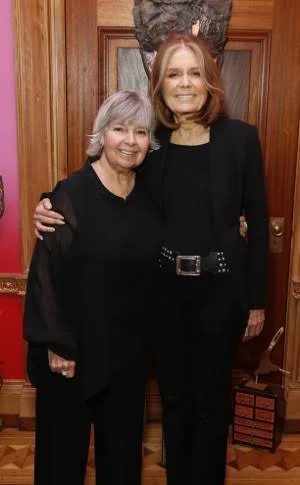
Gloria Steinem with Robin Morgan
Using separate approaches, both helped women find their own power while lifting up other women and people in marginalized communities. Gloria also said this about Dolly: “If feminism means each of us finding your unique power, and helping other women do the same, Dolly Parton certainly has done both.”
Dolly died on August 25. Gloria followed on September 2. And on Saturday, just three days after that, poet and activist Robin Morgan was gone too, another fierce architect of “herstory” who’d stood beside Gloria from the start.
Eleven days. Three women who spent their whole lives insisting that women’s stories, women’s work, and women’s pain were worth writing down.
I keep thinking about me in fifth grade with my pencil, adding “and women” to a sentence that didn’t include me. I didn’t know then that Gloria was marching, writing, and founding organizations so that sentence would eventually change on its own. I didn’t know Dolly was writing songs no one else in country music dared to write, proving a woman could be heavily made up and rhinestoned and still the toughest person in the room. I just knew that I had to fix that sentence and make my own voice heard.
Dolly and Gloria gave us permission to change things. Gloria gave permission through argument, organizing, and sheer persistence. Dolly gave it through a song, a business empire built on her own terms, and a refusal to let anyone else hold her publishing rights, name, or story. Neither one waited for the world to agree with her first.
Gloria and Dolly and Robin were doing the same work from different directions, and this week, all at once, we lost every direction at once.
I don’t know how to end an essay about that, except to keep adding the sentence “and women.”
Let’s make your message the one they remember. Fertile Ground Communications transforms complex ideas into clear, compelling messages that capture attention and inspire action. Whether you’re a small business, public agency, or nonprofit, we help your voice break through the clutter and connect authentically with your audience.
